Specializing in business travel, group and incentive travel and ALL destinations around the world. Our agents have a combined total of over 100 years of travel experience!
603.716.6869
Specializing in business travel, group and incentive travel and ALL destinations around the world. Our agents have a combined total of over 100 years of travel experience!
603.716.6869

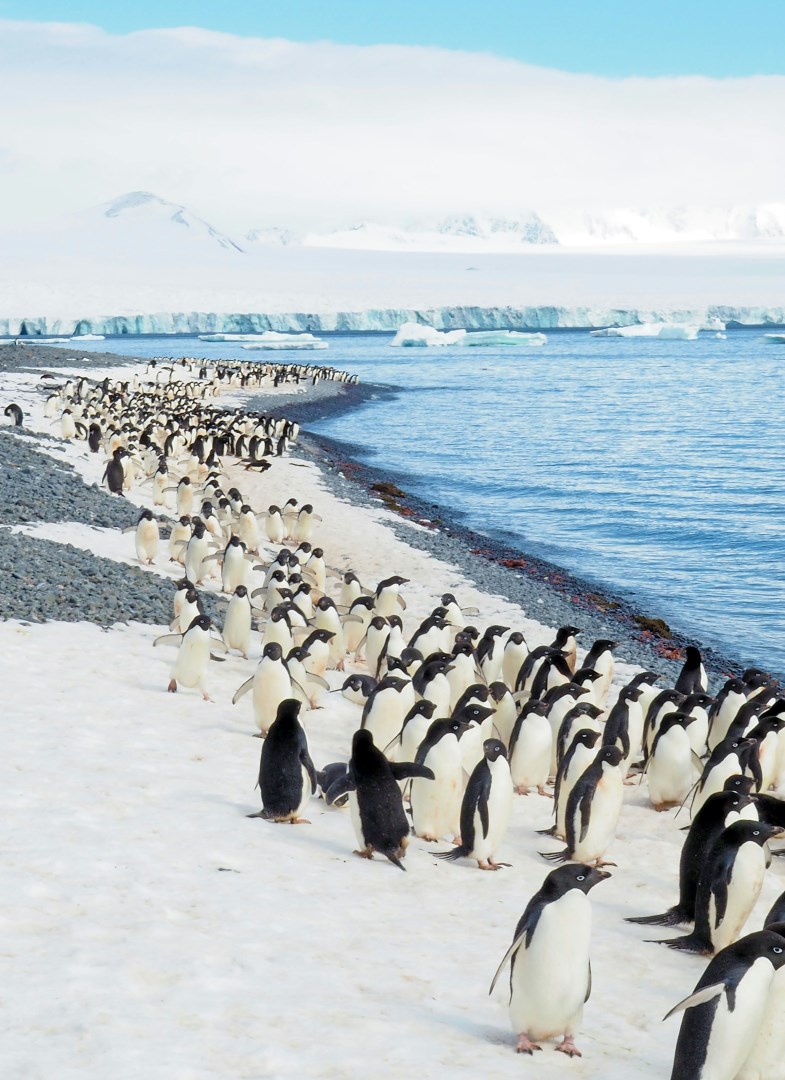
Brown Bluff is a distinctive coastal landmark on the east side of the Tabarin Peninsula, overlooking the southwestern Antarctic Sound. Its defining feature is a long beach of cobbles and volcanic ash backed by steep, red-brown cliffs that rise toward an ice-capped, flat-topped mountain. The cliffs are made of volcanic tuff and contain rounded volcanic bombs, giving the shoreline a rugged geological character. Glaciers and permanent ice border the site, while brash ice can sometimes spread across the beach. Brown Bluff is also one of the designated visitor sites in the Antarctic Treaty System.
Brown Bluff has little human infrastructure, and its identity is closely tied to Antarctica’s volcanic and wildlife heritage. The site is scientifically important because its exposed rocks preserve evidence of a volcano that erupted beneath thick glacial ice, creating distinctive layers of volcanic material. Its cliffs continue to weather and erode, producing scree slopes, rockfalls, and loose boulders along the shore. Visitors follow established landing and walking guidance designed to protect wildlife and avoid unstable slopes, reflecting the careful management required at Antarctic visitor sites.
The landscape is notable for the contrast between dark volcanic rock, reddish-brown cliffs, white glaciers, and the open waters of Antarctic Sound. A broad cobble-and-ash beach provides access to the shoreline, although tides, swell, strong winds, and drifting ice can alter conditions. Brown Bluff supports breeding colonies of Adélie and gentoo penguins, along with Cape petrels, snow petrels, kelp gulls, and skuas. Weddell seals regularly haul out on the beach, while leopard seals can be seen offshore. These wildlife concentrations make the coastline an important part of the local Antarctic ecosystem.
Brown Bluff’s most distinctive feature is the way its geology records an unusual interaction between volcanism and ice. Research from the British Antarctic Survey describes the formation as a subglacial volcanic sequence, with deposits shaped by water and thick surrounding ice. The exposed rocks therefore provide a visible record of volcanic activity beneath an ice-covered environment. Along the shore, lichens grow on exposed boulders, while mosses occur farther upslope. For visitors, the combination of volcanic cliffs, glaciers, penguins, seabirds, and seals makes Brown Bluff an informative landing site in the northern Antarctic Peninsula.

Email Us
Call Us
603.716.6869
Location
103 Mountain View Road
Deerfield, NH 03037



The Restless Breed is for the creators, the rebels, the ones with something to say - Even if they say it without a word.
This isn't fashion, it's a FLAG.

Consider donating to Skye Travel Corp's favorite foundation, Tunnels to Towers.
Our company supports veterans and American heroes.